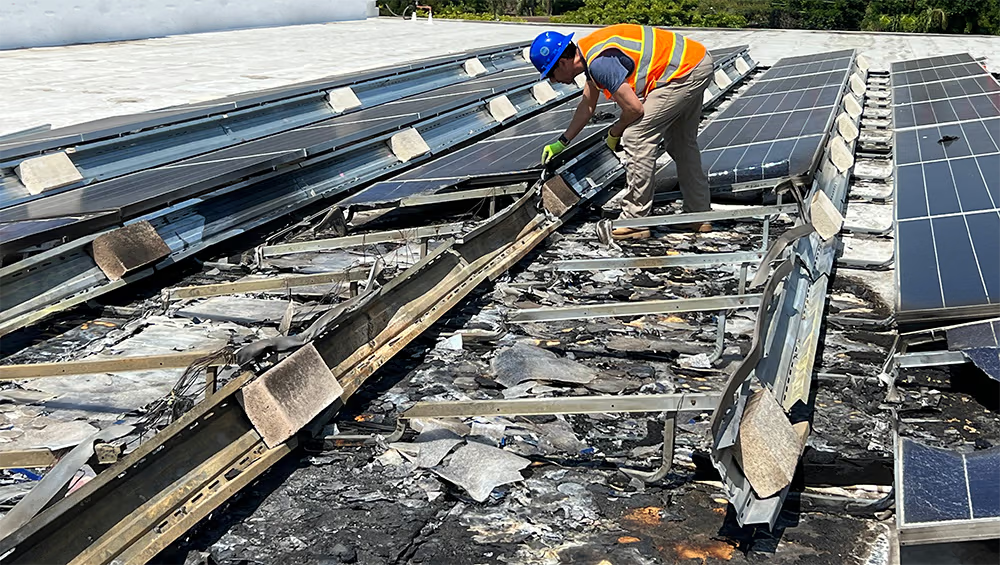
Most of my clients meet me on their worst day.
They call HelioVolta because of a serious failure at a solar project or battery energy storage system (BESS). Here’s a few examples:
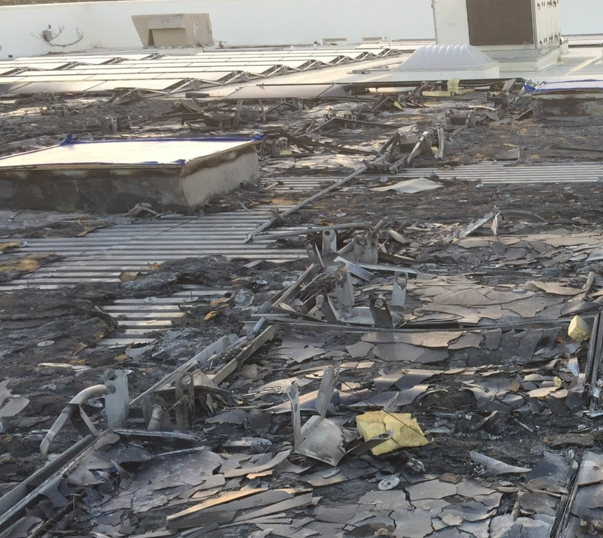
- A thermal event occurred on a rooftop, like the solar panel fires at US warehouses that are in the headlines and dominating my LinkedIn feed.
- A storm battered a PV power plant and left it limping, then their insurance provider disputed the claim.
- Energy production slid downhill quietly for a few months, then fell off a cliff overnight.
- Millions of dollars’ worth of batteries were improperly stored, compromising performance and voiding the warranty in one fell swoop.
No matter the cause, something is seriously wrong with a solar PV system or BESS asset by the time my phone rings. Sharp-eyed lawyers, angry neighbors, and irate investors are usually involved, and they’re looking for someone to blame. Our client needed an answer yesterday.
These dire, high-stakes moments are when HelioVolta tends to walk in the door. Honestly, our team was built for these moments.
But here’s the truth. We fail our clients if we only show up for their worst day. HelioVolta was founded to make sure their worst day never repeats itself.
How do we help our clients stop these worst-case clean energy scenarios? We teach them to climb the waterfall. If you want to eliminate the risk of solar and storage safety events, failures, and financial losses in your portfolio, your most important work is at the top of the cascade.
Solar Panel Fires, Battery Failures, and Waterfalls (Yes, Waterfalls)
Most problems in BESS and solar PV systems behave a lot like water: they flow downhill. The root cause is a decision made years earlier. For example, it’s a vendor that was never vetted, an overlooked test result, or a detail that never made it into the installation guidelines.
That decision rolls downstream, picks up speed, and eventually lands in the field as a scorched connector or a string that went dark.
The physical asset is the bottom of the waterfall. Every decision collects in the field as the system is built, commissioned, operated, and maintained. The consequences of these decisions cascade down the waterfall and pool at the bottom. Our client dove into a swirling, dangerous whirlpool expecting a leisurely swim.
So when we get the call, we start at the bottom, step into the plunge pool, and start climbing. Against the current, toward the source.
Each step up the waterfall takes us closer to the decision that actually caused the failure. It’s how HelioVolta helps clients move beyond addressing symptoms to implementing real solutions.
Step 1: Find the Cause of the Failure
Once I get the call, HelioVolta’s first step is usually a failure root cause analysis (RCA). The output of an RCA is a formal report on the cause of the event that carefully considers all potential factors.
At HelioVolta, an RCA is not a guess, not a hunch, not “well, it is probably the inverters” or “this sub is so bad.” We conduct a thorough investigation that identifies the most likely root cause—sometimes, several potential and/or interlinked causes in rank order—of the failure event.
This is where the engineer in me gets a little particular: trust the science, not the panic. We collect the data carefully, we lay it out so the pattern can actually be seen, and then we interpret it, in that order.
When a rooftop solar panel fire or chronic underperformance is the loud symptom of a problem, the root cause is often hidden in plain sight. We must fish for answers with on-site inspections, desktops reviews, lab testing, and interviews.
For a thermal event, the root cause could be a specific component or a series of components quietly conspiring, for example:
- If one inverter’s dirty filters weren’t cleaned, and it overheats catastrophically on a very hot day, just one component is responsible. (Although the O&M provider may share the blame.)
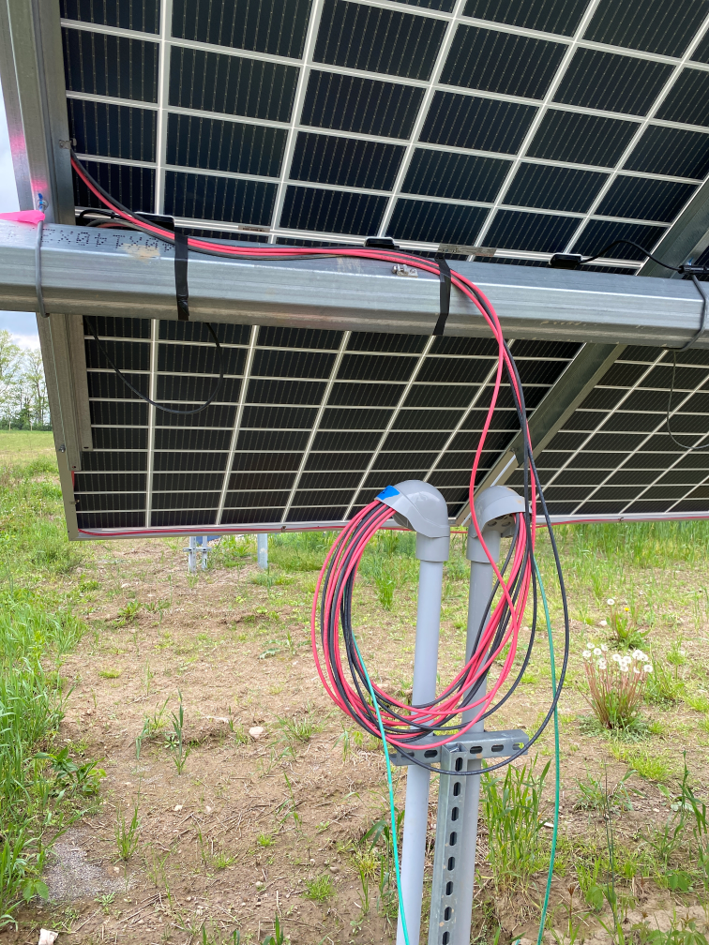
- An overtorqued connector inside split loom overheats as it operates over time, thermally deforming both the connector and the split loom. On a hot day, the split loom physically melts and drips. It contacts flammable debris under the array, sparking a rooftop fire.
For a natural disaster, extensive damage is rarely caused by the storm alone. It is the mitigation technique that was not used, the design consideration that was never factored into the installation, the small margin of error that evaporated under pressure. The storm was just the trigger. To illustrate, consider these questions:
- Were modules damaged because the trackers’ hail stow functionality failed?
- Were PV modules blown off racking because of loose hardware?
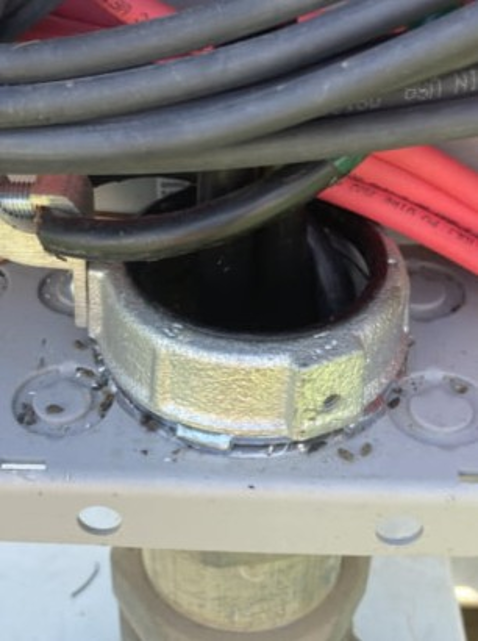
- Were the flooded enclosures sealed properly?
In short, we are after what caused the problem and any factors that exacerbated the damage. When you know why a failure occurred, you can actually do something about next time.
It is amazing how often the obvious villain turns out to be innocent once you let the measurements talk.
Step 2: Solar and BESS Failure Risk Assessment
Our next step to prevent storage and solar panel failure events begins with one question: this event happened once, so is it hiding anywhere else? To turn a one-time disaster into a strategy for safe, reliable renewable energy assets, this exercise is vital.
So we climb. We move from that one site, that one event and move up to analyze the client’s whole operational fleet. We find out whether the same root cause is lurking on other projects:
- Is the portfolio full of dirty inverter filters?
- Does the O&M provider service every site in the portfolio?
- Were the trackers installed as specified?
- Are torque marks missing on all the racking in this portfolio? What about the duct seals?
- Did the same EPC or subcontractor perform all mechanical construction in the portfolio?
The goal is simple and a little stubborn: make sure the failure never happens again. And if there’s no way to avoid it, because physics is undefeated and the world is messy, then our goal is to make sure it happens to the smallest possible extent, on the fewest possible assets.
Step 3: Implement Quality Controls Throughout the Project Lifecycle
Some issues do not wait for operations to commence to reveal themselves. They are visible earlier, during commissioning or even construction, if you know where and when to look.
So we keep climbing, and we move our checks upstream to the stage where that specific issue first becomes catchable. A problem caught at commissioning is a fraction of the cost, and a fraction of the heartburn, of the same problem found two years into operations.
When you start paying attention to quality at every step of the project lifecycle and collect field data systematically, you can start answering the questions that really matter because they reveal programmatic solutions:
- Are these inverters prone to dirty failures?
- Are we budgeting enough for O&M?
- Is this tracker system’s hail stow functionality reliable?
- What tools do our mechanical subcontractors use?
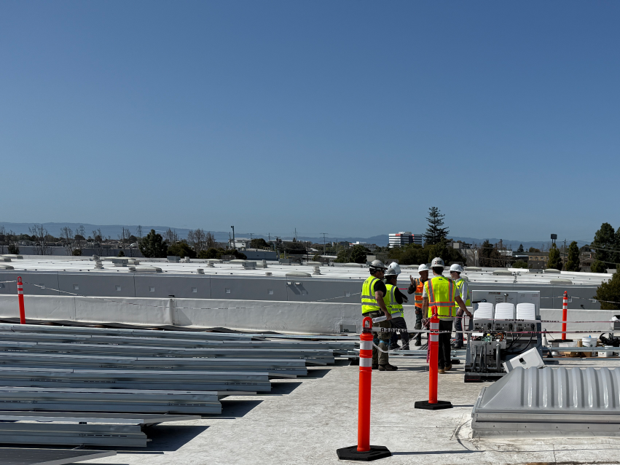
Step 4: Turn Quality into Standard Operating Procedures
At the very top of the waterfall is the source of real change: the company and policy level, the technical side of how our clients guide and direct their contractors.
This is the highest-leverage spot on the whole river. When a client’s technical guidance includes clear equipment standards, builds verification and testing into multiple stages of the development cycle, and routes work to approved vendors who went through a thoughtful vetting process, entire categories of failure simply never get a chance to form.
Millions of dollars of future problems are prevented by the stroke of a pen, the deletion of a line, a better procurement decision. No post-failure site visit is required, because the issue never makes it to a site.
In practice, turning failures into programmatic quality controls looks like:
- System design standards and approved vendor lists that are informed by field data
- Milestone inspections during construction that generate trackable punch lists
- Remediation verification to confirm defects are corrected properly
- O&M standards and reports that prioritize corrective maintenance accurately
- Portfolios that safely deliver clean energy and financial returns. No panic required.
What Matters Most: The Feedback Loop
I have made the climb sound tidy, like a clean staircase from the field to the boardroom. It is not always. Sometimes the climb is fast, sometimes it is slow. Our clients have assets scattered across every stage of development, each carrying its own considerations: federal tax credits, other incentives, environmental factors, and a dozen project-specific wrinkles that are never quite the same twice. All of these factors get weighed as we climb.
But here is the real payoff, and it is the reason the Waterfall Method works. The climb creates a feedback loop. Everything our team (and our clients’ teams) experience downstream in the trenches of the field on their worst days is carried back upstream to the people who write the guidance. The melted connector becomes a line in a wire management plan. The skipped test becomes a required hold point. The milestone payment is contractually withheld if quality standards are overlooked. The field tells the headwaters how the water flows and where to direct the current.
If you have ever studied a control system, you know the punchline: a loop without feedback drifts. It cannot help it. The only way a process gets better instead of just busier is if reliable information flows back to where the decisions are made and the decisionmakers respect the information.
We work tirelessly to make that feedback loop robust, communicative, and trusted. Our goal is not to produce a report that dies in an inbox, but rather to deliver a signal that informs the next decision. Frankly, we want everyone in solar and storage to learn from every waterfall climb we undertake. That’s why HelioVolta publishes free technical reports on the failures we observe.
It’s Time to Act
Make no mistake. Solar panel fires are an existential threat to the clean energy transition. As soon as renewable energy technology is perceived by the general public as unsafe or untrustworthy, the industry’s growth will stall.
When lives and property are at stake, it does not matter that photovoltaics and batteries are fundamentally safe and reliable when correctly manufactured, installed, and maintained. All that matters is the risks that arise on our clients’ worst days.
Solar and storage are young industries, and they are evolving fast. That is exciting, and it is also exactly why the waterfall matters. The faster we close the feedback loop, the faster the climb gets made, and the faster the whole industry starts building assets that are built to last for the long term.
At HelioVolta, we will meet you on your worst day, gladly. We will stop the panic. We will cut through the noise when your project nosedives into a maelstrom. But then we climb together, until the worst day gets designed out of existence, one well-collected data point, one honest interpretation, and one deleted line at a time.
Trust the science. Trust the math. They have never let us down.