
A Common Language for
PV Quality
The HelioVolta Quality Standard® ranks PV systems with a single, comparable score for workmanship. Now you can measure the quality of any portfolio in the same way.
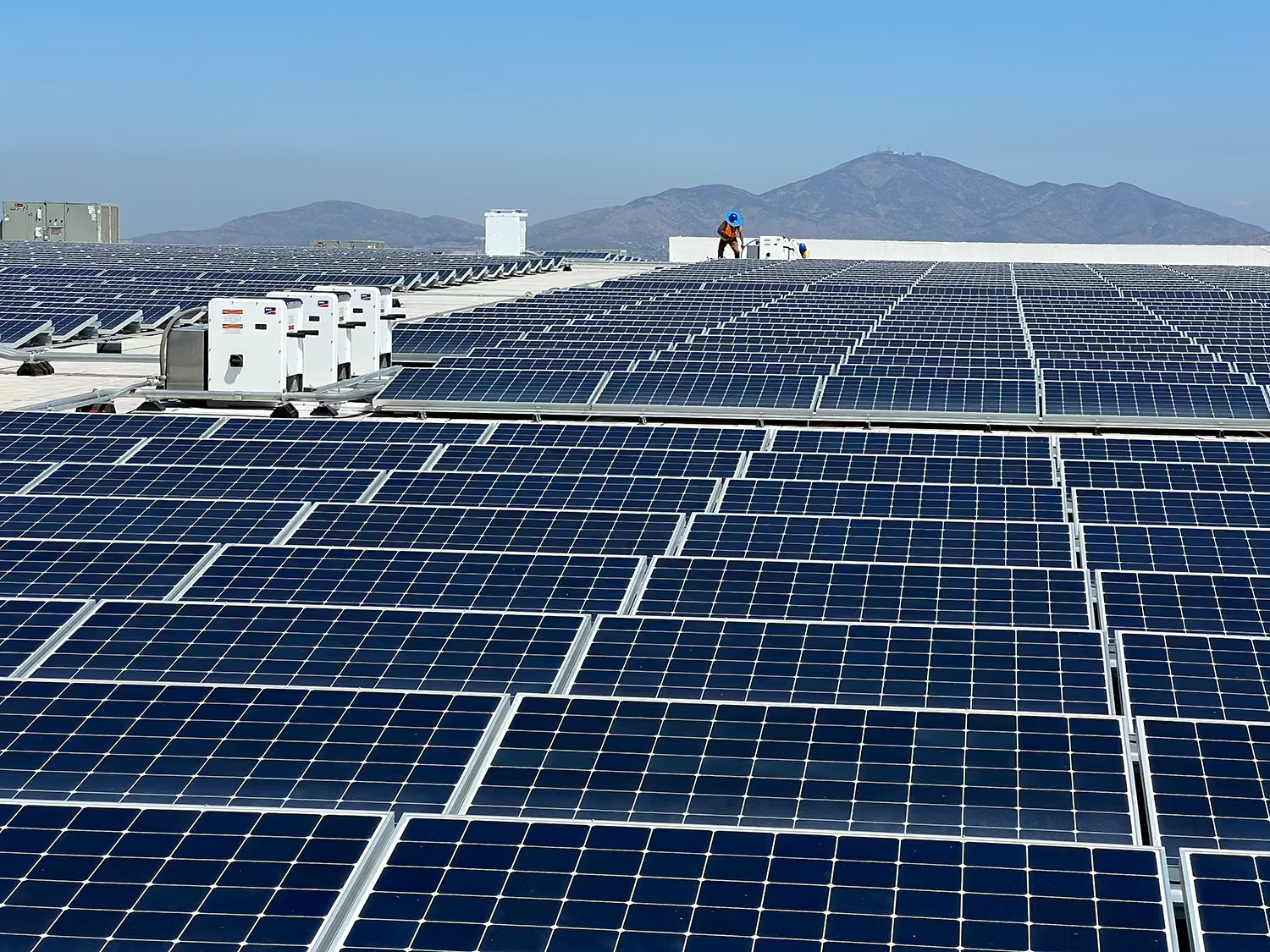
Everyone claims to build and operate quality PV systems.
Who can prove it?
Ask ten solar professionals to define a quality solar installation and you’ll get ten answers. Most are some variation of “I know it when I see it”.
This approach may be acceptable in the field. It does not work for contracts, purchase agreements, or insurance filings, especially when margins are squeezed by supply chain and policy uncertainty.
The consequences of inconsistent quality standards are expensive for PV asset owners, investors, and system hosts:
When risks are overstated...
Portfolios are undervalued, money is spent on unnecessary corrective actions, and insurance premiums are excessive.
When risks are understated...
Safety events are more likely, financial models are inflated, and insurance premiums are insufficient.
When risks are disputed...
Commissioning is stalled, contractor payments are delayed, transactions are derailed, and costly litigation may follow.
How It Works
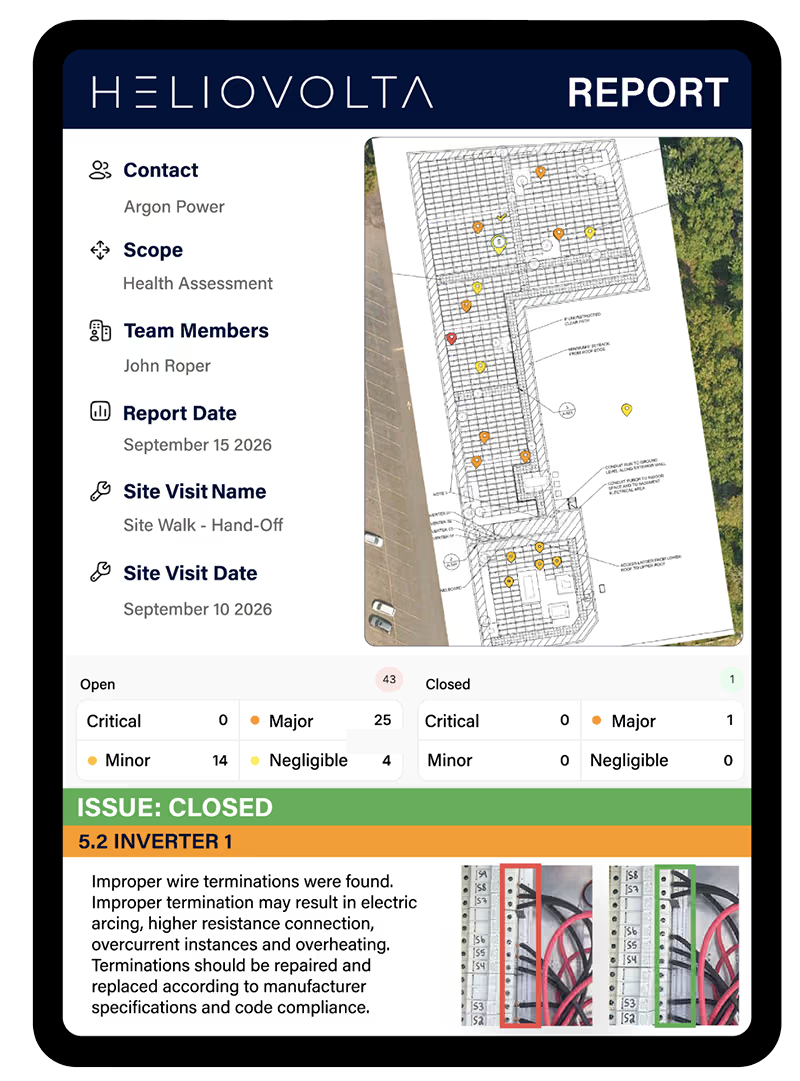
A project must receive a comprehensive health assessment from HelioVolta to be ranked using the HQS. Every issue we find in the field is ranked by risk severity using our published Risk Assessment Matrix, which has five criteria: electrical safety, thermal performance, code and manufacturer compliance, likelihood of catastrophic failure, and issue frequency across the system.
Every project starts with 1,000 HQS points.
Points are deducted based on the number, severity, and status of every issue documented by HelioVolta:
Risk severity is key. More points are deducted for high-risk issues.
Open issues cost twice as much as closed issues. Remediation matters. If issues are corrected, HQS scores improve.
Deductions are set on a percentile basis that varies by project size. This means a 400 kW rooftop and a 4 MW ground mount can be compared on level terms.
The HQS Rating System
The HQS generates a point-based score that maps to a familiar letter grade (A-F) as shown in the table below.
HQS Grade
HQS Points
Financial Impact
What is an HQS Score Worth?
For Investors
As the era of guaranteed solar returns from tax credits ends, PV systems will be valued on their ability to reliably generate power for decades, not on how cheaply they were built. The HQS makes construction quality a factor that you can underwrite: set a minimum HQS rating as a condition for funding, tie milestone payments to scores, and track HQS across your portfolio alongside availability and performance ratios.
For Asset Owners
Construction defects are often overlooked at handoff, but they surface years later as truck rolls, lost energy yield, and system downtime. HQS scores at the time of commissioning can surface long-term quality risks before their consequences are realized. When projects are inspected before EPC handoff and warranty expiration, asset owners can bake HQS scores into EPC contracts to protect their return on investment.
On the Secondary Market
HQS scores offer both sides of portfolio transactions a comparable, empirical quality metric. They allows buyers and sellers to move past arguing over anecdotes in a data room: use HQS scores to price assets, target holdbacks where warranted, and build remediation budgets that are grounded in real-world findings instead of guesswork. If you’re a seller with well-built assets, use strong HQS scores to command premium pricing.
For Insurance Providers
Underwriting and claims hinge upon a system’s ability to withstand environmental conditions through years of operation, and the HQS is a proxy for resilience based on documented, severity-ranked, geo-referenced field evidence. Insurers can use scores to differentiate risk across their book of business, set quality standards as a condition of coverage, and establish pre-loss baseline conditions that simplify event analyses.
For O&M Teams
O&M teams inherit whatever construction teams leave behind: projects with poor workmanship require extensive corrective maintenance to operate safely and reliably. HQS scores help O&M teams and asset owners align on the appropriate budget and maintenance schedule for any given asset, ensuring O&M contracts are scoped realistically.
For EPCs
Most contractors can point to years in business and megawatts installed as proof of their expertise. Very few can present an independently verified workmanship rating that unequivocally proves their commitment to quality. The HQS is unbiased proof of your system’s high caliber and your crew’s workmanship.
The HelioVolta Quality Awards
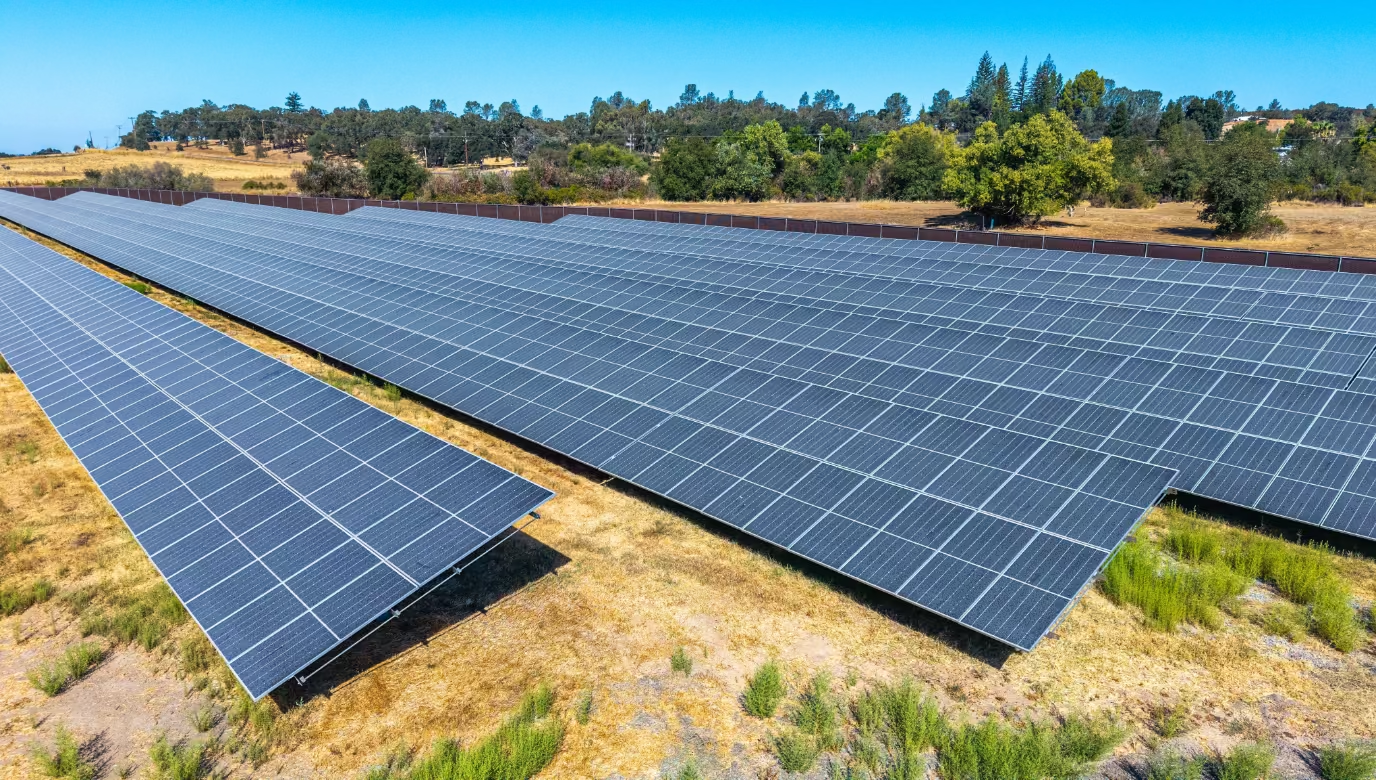
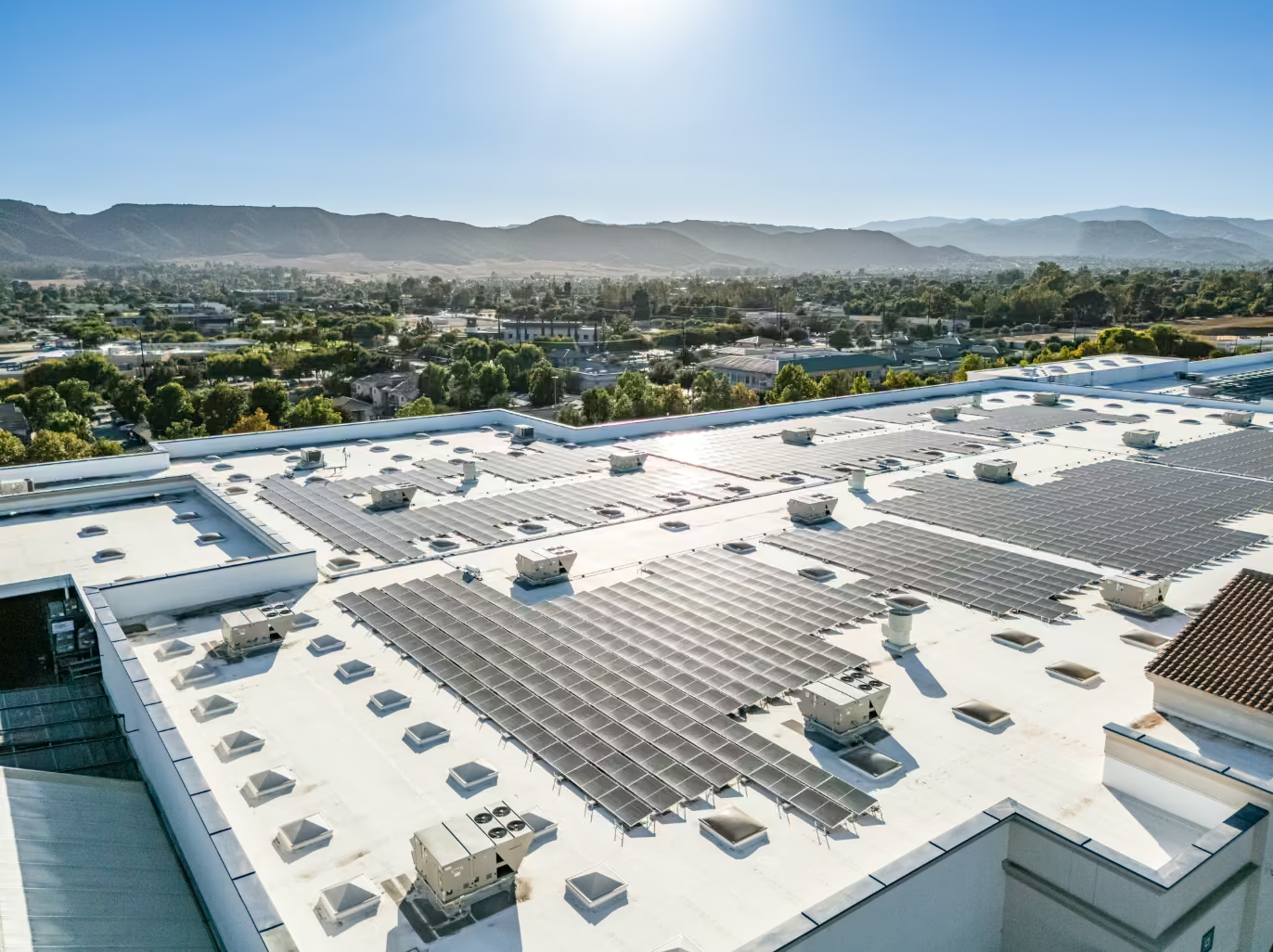
Exemplary workmanship deserves to be celebrated. Our awards honor the rooftop and ground-mounted commercial PV systems with the highest HQS scores and the teams who built them.
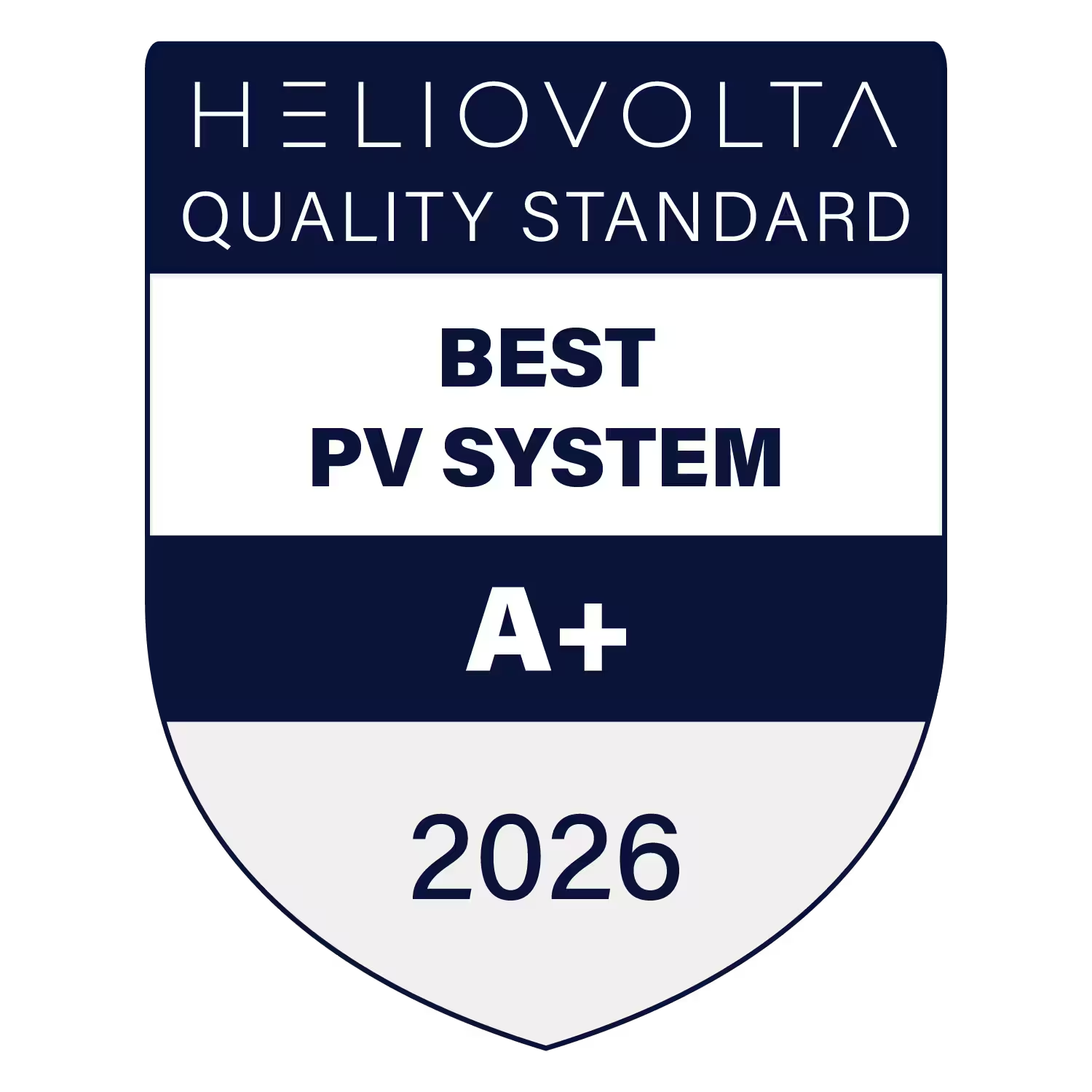
The 2026 HQS awards are:


How Winners are Selected
All projects with system sizes under 5 MWDC that received a comprehensive visual and thermal inspection from HelioVolta in 2025 were eligible for our inaugural awards.
Each eligible project was ranked according to the HQS. All projects that received ≥ 975 HQS points (A+) underwent a manual engineering review to validate construction quality and identify instances of exemplary EPC workmanship. The highest-scoring rooftop and highest-scoring ground-mounted projects are our inaugural winners.
We will add larger projects for future awards as our database of eligible utility and distributed generation systems grows.
Note: Award recipients are notified directly by HelioVolta. If you would like your projects to be considered for future awards, contact HelioVolta for a PV system inspection.
FAQs
No. Code compliance is the floor. While the HQS accounts for code and manufacturer specifications, it also evaluates practices that affect long-term reliability and serviceability. The rubric assesses whether a system will run safely and productively for decades, not simply pass building inspections.
Yes. Open issues carry twice the point deduction of closed ones, so documented remediation improves a project's score, but does not altogether erase deficiencies. We work with EPC contractors to verify punchlist remediation and record remediation work in SolarGrade.
No. While HelioVolta publishes field data in periodic reports, including the 2026 PV Health Report, data is anonymized to provide a benchmark for the industry. Project-level and contractor-level scores belong to our clients. The only exception is the Quality Awards, where recipients are named with their written permission.
Point deductions are calculated on a percentile basis that varies by project size, which levelizes comparisons between a small commercial rooftop and a multi-megawatt ground mount.
Any owner, investor, lender, insurer, contractor, or operator engaging HelioVolta for a qualifying field inspection can request an HQS score. Scores can be generated for a single project or applied across an entire portfolio.
For a detailed explanation of the HQS methodology, please download the 2026 PV Health Report. Our team is also available to discuss your specific quality goals and concerns. Contact us here
Get Started with HelioVolta
Ready to achieve your clean energy goals? Partner with us to build a quality program that reflects your team’s priorities.